
Several strange projects have been fermenting and are now ready to imbibe!
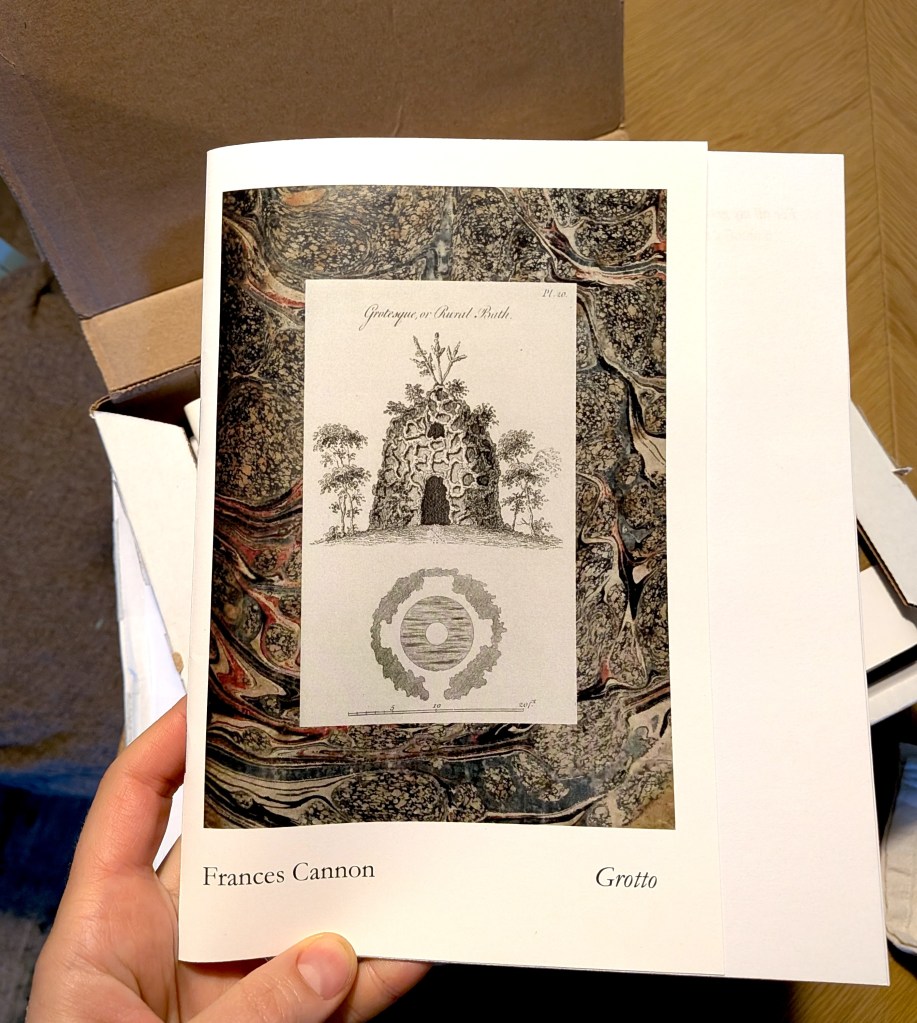
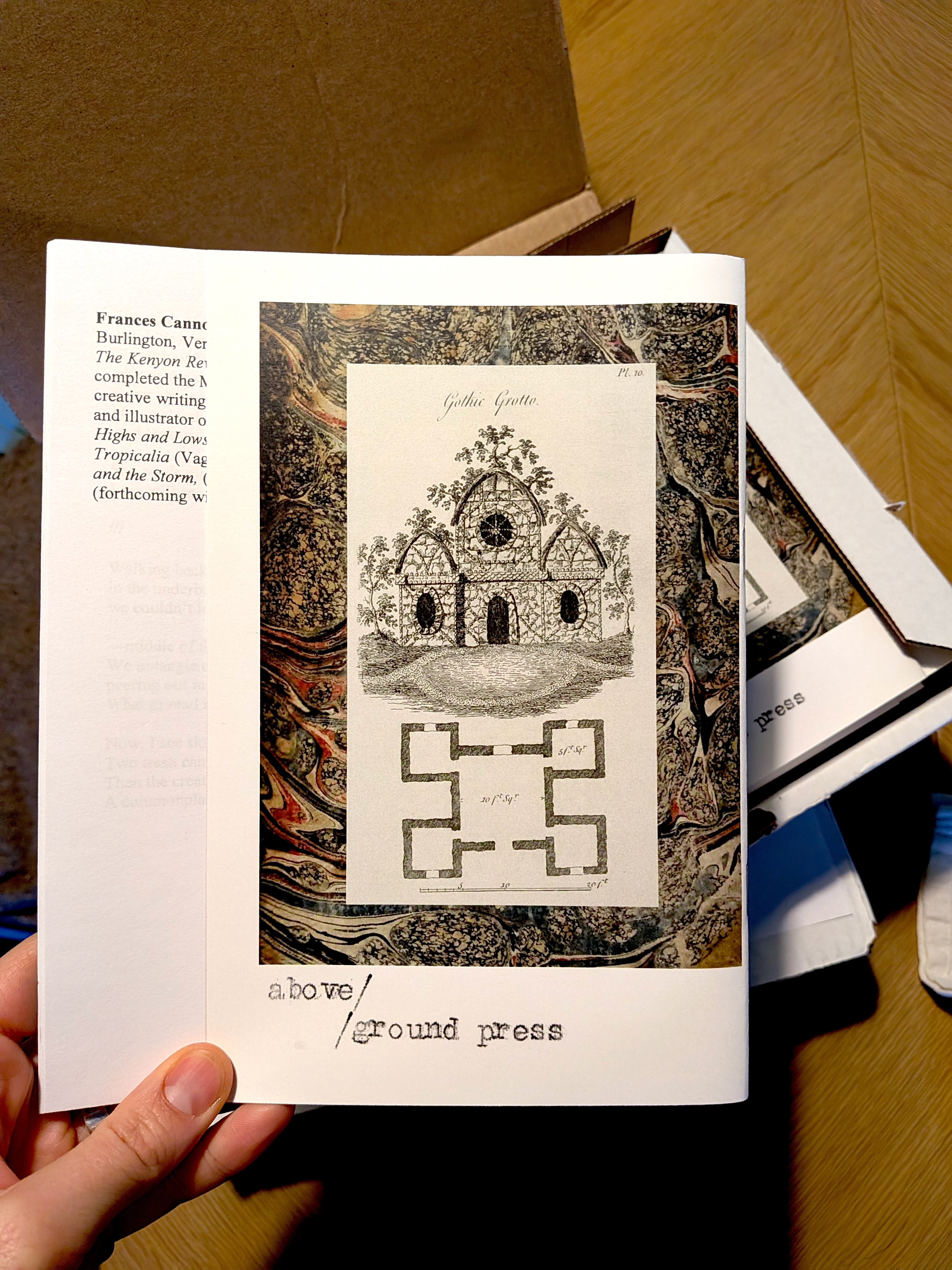
I have a new chapbook of poems, “Grotto,” published by above/ground press. You can read an accompanying essay that I wrote about grottos here, or scroll down on this page.
Here is an excerpt of my poem “Grotto,” printed as a letter-pressed postcard poem by the talented Kate Gibbel for her project, Send Me Press.

This poem is collected in my chapbook by the same name, “Grotto,” published by above/ground press. The editor of above/ground, Rob McLennen, also publishes a literary journal called ‘Touch the Donkey,’ —he interviewed me about “Grotto” and other recent projects; read the interview here.
Here is an essayette that I wrote to accompany the chapbook.
There is a strange vision lodged in my memory and subconscious: fountains and alcoves dripping with artificial mineral deposits, bulbous growths of stone and cement, shells embedded in hypnotic mosaic patterns, wet with water and algae. When I visited Madrid last summer for a botany conference, I wandered from park to park in sickening heat, and in a shaded courtyard in the heart of El Retiro Park, I noticed a fountain that I instinctively clocked as ‘ugly’—ugly to me, yet utterly compelling. I couldn’t pull my eyes away. The fountain looked like a mistake, or an unfinished sculpture—rough, loose globs of stone and cement, forming two massive structures: a crude base, and a loosely elevated ‘top’, water spilling forth haphazardly.

In a frenzy of curiosity-driven research, I learned that this fountain was built during the Victorian ‘Grotto’ architectural craze, out of a material called ‘Pulhamite,’ which is an artificial stone featuring a mix of rubble, rocks, and cement. Grotto-grotesque architecture has much earlier origins, in the Renaissance, grotto caves were built in private estates and gardens for personal and social entertainment. This particular fountain in El Retiro in Madrid has a mixed history—the “Estanque Ochavado” also known as the “Fountain of the Snails” (Fuente de los Caracoles) or the “Pond of the Bells” (Estanque de las Campanillas). The pond itself dates back to the early 17th century, but the fountain was constructed in the early 1900s. Snails, Bells, Rubble, this ‘ugly’ fountain style has transformed into a personal obsession. I now seek out grotto-style fountains, walls, alcoves, sculptures, gates, fireplaces, in every city that I travel.
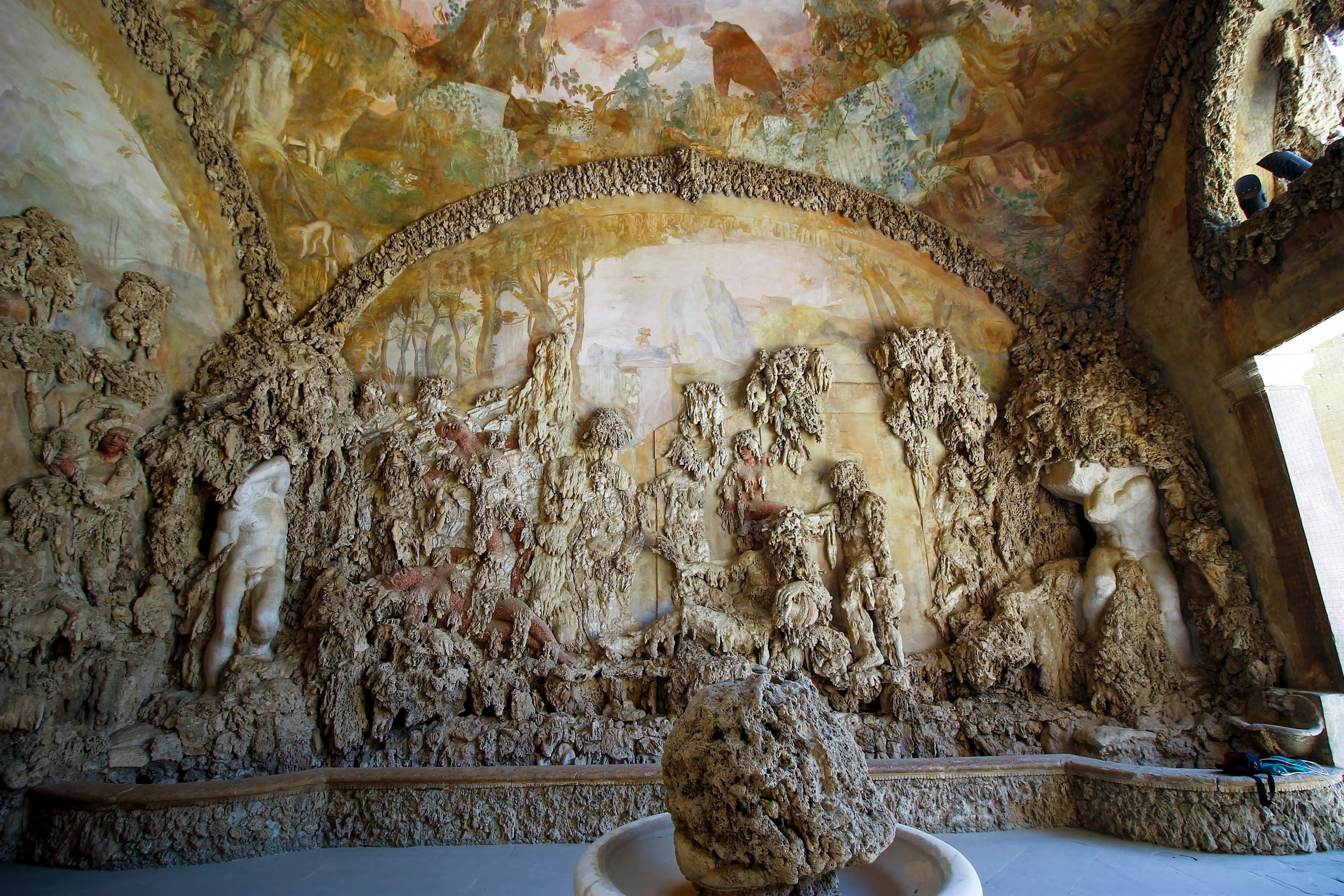
Pondering this fountain, I also remembered a similarly ‘grotesque’ room in the Boboli Gardens in Firenze. I traveled there in high school and haven’t been back since, but the city affected me so strongly that I could draw a memory map of every street I walked on, complete with bookshops and gelaterias. I remember clearly visiting this grotesque room that I now know is called “La Grotta del Buontalenti”—it is a cavernous, arched, partly covered courtyard featuring a fountain and lavishly decorated walls, reminiscent of the drip castles I built from wet sand and mud as a child.
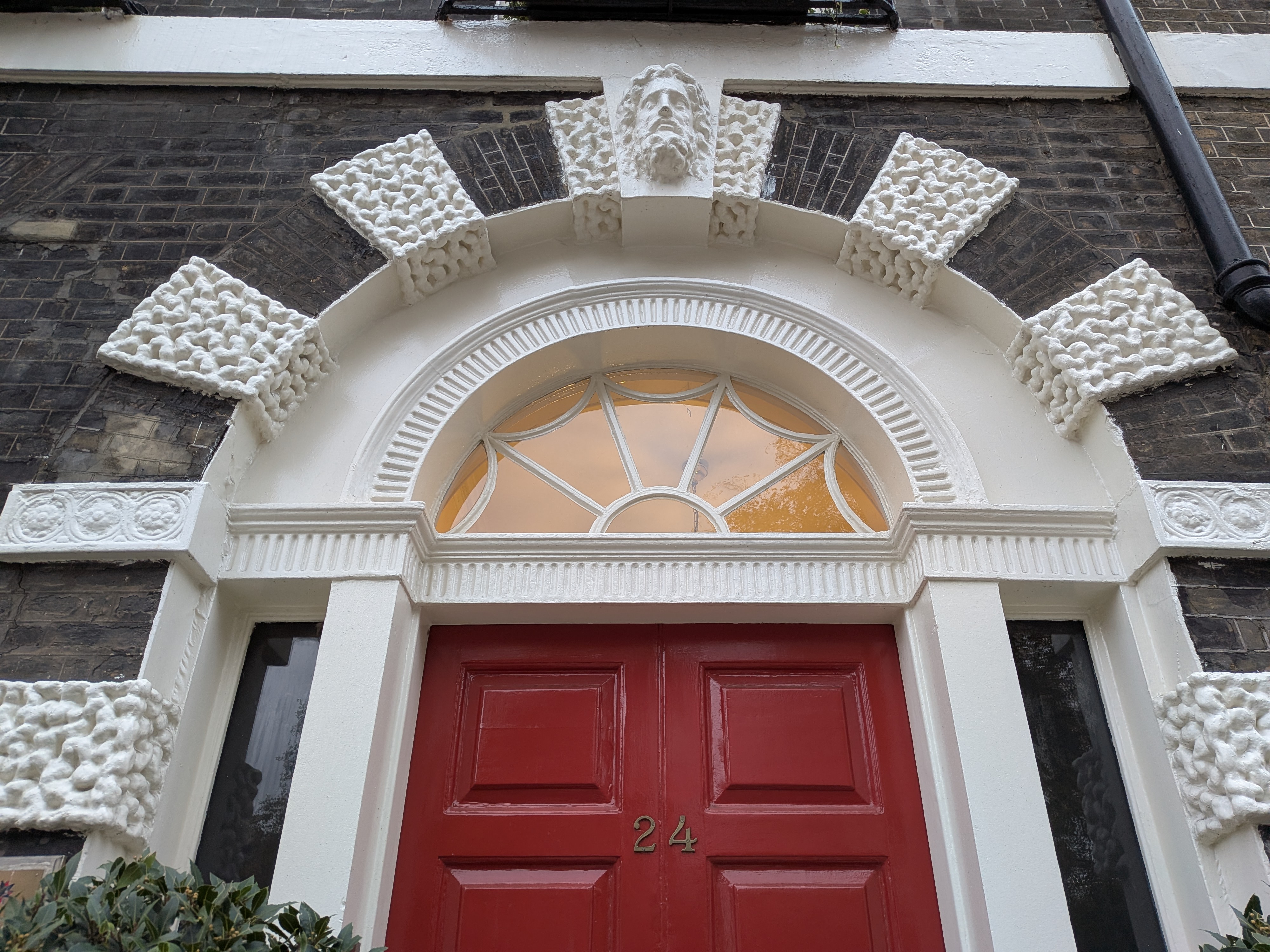
Many grottos and grotesque fountains are built using shells as decoration, such as the shell house in Grosvenor Gardens. I’m more drawn to the rough, cave-like “rustication” textures, and the vermiculated architecture where a stone surface is carved with a texture resembling worm tracks in mud (from the Latin vermiculus, “little worm”).
So, what does any of this have to do with poetry? Well, follow my strange obsessions and rabbit holes of research, like the burrowing tracks of a worm, or slime paths of a snail, and you’ll find my little chapbook of poems, “Grotto”!

 FRANKY FRANCES CANNON